Chronic Pain and Grief: Missing Who You Used to Be
Some of what women miss about life before chronic pain is big: a career, a marathon, a holiday they had to cancel twice. A lot of it is small enough to sound silly when said out loud. Saying yes to a friend without checking how your body feels first. Getting through a workday without wondering whether you’ll manage tomorrow. Going out for dinner without calculating what it will cost you on Saturday.
Chronic pain can bring real grief: for your health, your work, your independence and the person you used to be. That grief is a reasonable response to real loss. It’s often invisible to other people, which makes it lonelier, and it can sit alongside working towards change.
Why does chronic pain feel like grief?
Because it involves loss, usually many losses, stacked quietly on top of each other. The ones I hear about most often:
physical freedom and spontaneity
work, professional identity and financial independence
relationships, intimacy and the experiences you used to share
confidence in your own body
being the dependable one
the future you had imagined
There’s also often a sense of grief of having lost the person they used to be or the life they used to have. That’s how I’d put it after years of sitting with women in this situation, and it’s the part people around them rarely see.
Most of our ideas about grief come from death. There’s an event, a funeral, a period when people expect you to struggle. Chronic pain offers none of that. Nobody has died. Nobody has left. Life carries on around you, and from the outside you may look like you’re coping, so nobody thinks to ask.
The family therapist Pauline Boss used the term ambiguous loss for losses that have no clear event and no clear ending (Boss, Ambiguous Loss, Harvard University Press, 1999). She wasn’t writing about chronic pain. I find the idea useful anyway, as one way of understanding why this grief is so hard to settle. You’re mourning something that may or may not come back, while still living in the body that changed.
What if you miss who you were, more than what you could do?
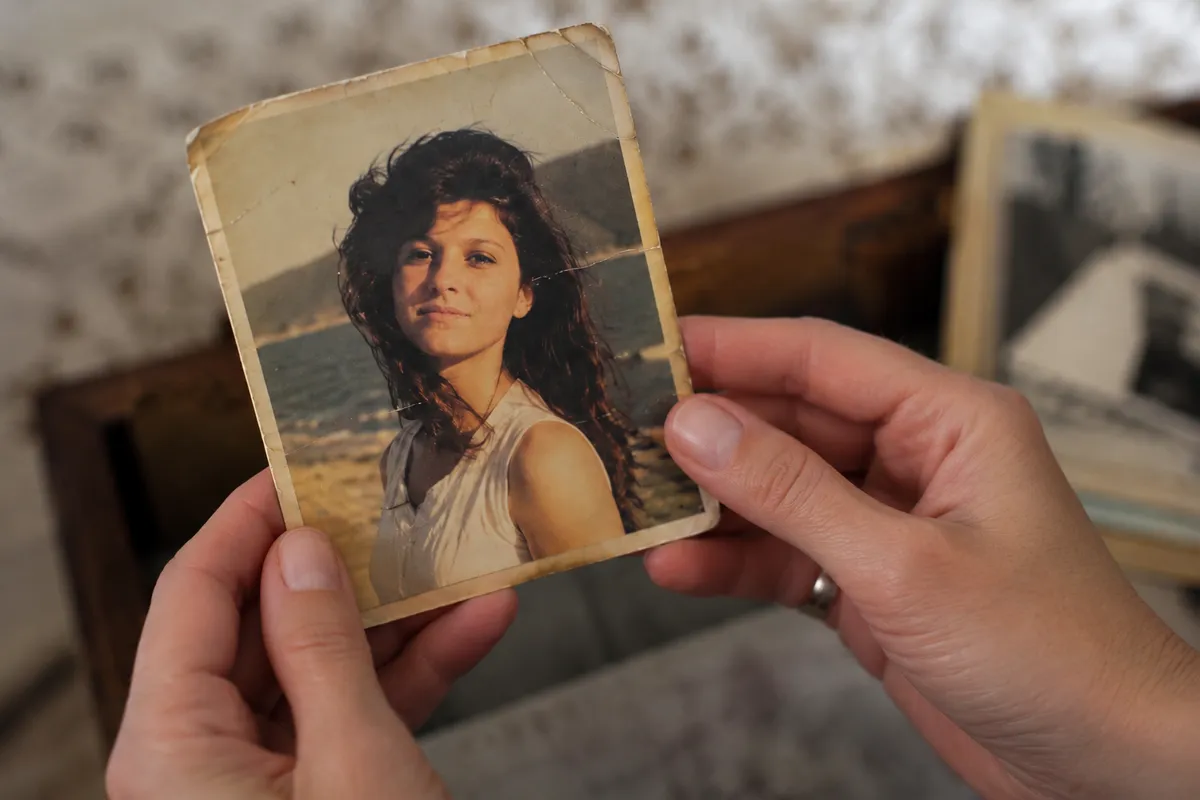
For some women the hardest loss is a personality.
I work with women who were the funny one, the person who suggested the plan and turned up first. They describe that version of themselves almost like an old friend they’ve lost touch with. Going out is the smaller part of it. What they miss is being someone who wanted to.
This is often harder to name than a lost job, because it can sound like self-pity. Persistent pain drains the resources that lightness and sociability run on: energy, sleep, a sense that your body will cooperate. When those go, the outgoing self often goes quiet with them.
For many women in their forties and fifties, perimenopause arrives in the middle of this. Changes in sleep, mood, energy and pain sensitivity can layer on top of existing symptoms, and it becomes very hard to tell what belongs to what. Women tell me they don’t recognise themselves, and they don’t know which part to blame. If you’re in that position, it’s worth talking to your GP about perimenopause specifically, because some of what you’re carrying may be treatable in its own right.
Who are you if you’re no longer the one everyone relies on?
Many of the women I work with have spent years being responsible, productive and available. Their worth became closely tied to what they could do for other people, usually long before the pain arrived. I’ve written about where that pattern comes from in why chronic pain affects high-functioning women.
When pain changes their capacity, the expectations don’t change with it. She still expects herself to show up, to deliver, to be fine. The body can’t meet that standard any more, so the gap gets filled with shame.
The question underneath becomes less about symptoms and more about identity. Who am I, if I can’t be the person everyone relies on?
That question deserves a real answer, and it won’t come from a pep talk. It starts with seeing that the measure she’s using to judge herself was learned, often very early, and can be questioned.
If you want to understand how patterns of responsibility, overriding your body’s needs and chronic symptoms can end up intertwined, my free guide, Why It Happened to You, explains it.
Is it grief, guilt or shame?
They often arrive together, and they get treated as one thing. They’re different, and telling them apart helps.
Grief sounds like: I miss being able to do that.
Guilt sounds like: I’m letting everyone down because I can’t do that.
Shame sounds like: I’m useless now.
Grief is about loss. Guilt and shame are about what you think you owe, and what you think you’re worth. This is how I’d describe what I hear most often:
“There’s a huge fear of not resolving the issue, of always being in pain, fear of their symptoms, feeling useless because they have to cancel plans, or, you know, they don’t manage to work. They have to take days off work. There is always guilt, shame.”
The grief deserves room. The guilt and shame deserve a closer look, because they’re usually built on expectations you would never apply to anyone else in your situation. You don’t need to label every feeling. Noticing which one is speaking can change what you do with it.
Why does “stay positive” make it lonelier?
At least it’s not worse. Focus on what you can still do. Try to stay positive.
Most of the people who say these things mean well. The effect is still the same: the message that your grief is a problem, and that the acceptable response to loss is to move on quickly and look grateful while you do it.
So women stop talking about it. They perform being fine for the people they love, which costs energy they don’t have, and they grieve on their own.
You can love your family and grieve the experiences you’ve missed with them. You can value your body and still be distressed by what has changed. Gratitude and grief can sit side by side. Neither cancels the other.
How do grief and the nervous system affect each other?
Long periods of emotional strain affect the body. They can keep your system more alert, disturb sleep and make bodily signals feel louder. For some women, the pressure to keep performing as their former self adds a constant background load, and that can feed into how sensitive their symptoms become. I explain how a nervous system learns to stay on alert in what neuroplastic pain is.
I want to be clear about one thing. Grief is a fitting response to real loss, and it doesn’t need fixing. Nothing in your nervous system has gone wrong because you’re sad about what you’ve lost.
What tends to make things heavier is everything that gathers around the grief: the self-criticism, the fear that this is permanent, the pressure to be over it by now. That’s where there is often room to work, while the grief itself is allowed to stay.
How do you rebuild a relationship with who you were?
You don’t have to invent a new identity, and you don’t have to accept your limitations on a deadline. Start smaller, with questions:
What do I miss most about the person I was?
What did that activity or role actually give me?
Is there a way to reconnect with some of that feeling, without demanding that my body perform exactly as it used to?
Take walking. One woman misses walking because it was exercise. Another misses it because it was freedom, the hour of the day that belonged to nobody else. Those are different losses, and they point to different possibilities. Freedom might be found again in ways that have nothing to do with distance, depending on her circumstances and her health.
The same goes for the outgoing self. Sometimes what’s missing underneath is connection, or play, or feeling that you matter in a room. Some of that can be reached in smaller ways, long before your body is ready for a full night out.
None of this asks you to stop missing your former life. You can acknowledge what chronic pain has taken and still believe your life has a future. The grief and the hope can both be true.
Where to start
If you notice that your body often feels under pressure or on alert, my book The Safety Signal explores how danger and safety responses are learned in the body, and how to start understanding yours differently. It includes somatic exercises, reflection prompts and guided audios, for £7.99. It won’t resolve grief. It may make the body you’re grieving in feel a little less like enemy territory.